


Programme Overview
Duration
14 Days · 13 Nights
Route
Shanghai → Suzhou → Nanxun (en route) → Hangzhou → Beijing
Highlight
5 Hands-on Workshops
9 Site-based Inquiry & Cultural Discussion
4 Distinct urban and regional contexts
13 Iconic cultural & everyday-life experiences
Why This Programme
China offers one of the world’s most compelling studies of cultural continuity: thousands of years of civilisation, a rich range of aesthetic and philosophical traditions, and a society continually reworking the relationship between inherited wisdom and modern transformation.
From classical gardens, silk embroidery, tea ritual, Taiji, Buddhist temples, and neighbourhood life to design museums, contemporary architecture, and rapidly expanding urban districts, culture appears here not as a finished historical record, but as a living practice — preserved, adapted, debated, and renewed.
Across Shanghai, Suzhou, Nanxun, Hangzhou, and Beijing, the programme reveals how ideas of harmony, order, family, community, craftsmanship, belief, and place continue to shape everyday Chinese life. Monuments and museums provide the evidence; workshops, discussions, practitioner encounters, and close observation reveal the human stories and systems behind them.
What We Do
A 14-day immersive cultural journey across four major cities, with Nanxun as an en-route Jiangnan stopover, combining landmark sites with neighbourhood observation, hands-on workshops, reflective practice, and contemporary cultural encounters.
Each day is built around a thematic anchor. Shanghai explores international exchange, religious and commercial life, museum collections, and urban reinvention. Suzhou and Nanxun introduce Jiangnan gardens, canals, merchant culture, performance, silk, embroidery, and fan-making. Hangzhou connects West Lake, Buddhist practice, Longjing tea, contemporary design, and expansion along the Qiantang River. Beijing brings imperial ritual, hutong neighbourhoods, historic commerce, the contemporary capital, and the Great Wall into one final cultural frame.
Garden analysis, embroidery, fan-making, Taiji, Song-dynasty tea practice, museum study, temple visits, architectural observation, and guided urban walks make culture tangible through materials, movement, space, taste, ritual, and everyday life. Rather than separating ancient tradition from modern China, the programme traces how the two continually reshape one another.
Key Takeaways
-
An embodied understanding of Chinese aesthetic and philosophical thought — from harmony between people and nature to ritual, balance, mindfulness, and spatial order
-
A practical framework for reading culture as a system shaped by history, family, governance, commerce, social values, and urban form
-
A comparative understanding of four distinct cultural settings: Shanghai’s layered modernity, Suzhou’s Jiangnan refinement, Hangzhou’s landscape civilisation, and Beijing’s imperial and national symbolism
-
Sharper observational and field-research skills through mapping, comparison, sketching, object study, and reflective writing
-
Cross-cultural confidence and perspectives beyond conventional tourism, developed through direct engagement with artisans, scholars, practitioners, and local communities
Destinations

Beijing
China’s political and cultural capital, shaped by imperial planning, ceremonial order, hutong neighbourhoods, national institutions, and collective memory. From the Central Axis and Forbidden City to courtyard life and the Great Wall, Beijing shows how architecture, governance, and symbolism have defined both the state and the everyday experience of the capital.

Suzhou
One of the defining cultural centres of Jiangnan, Suzhou has been shaped by canals, classical gardens, silk, Kunqu opera, and scholar culture. It distils a distinctive Chinese ideal of refinement: nature composed through architecture, craftsmanship sustained through patience, and everyday life organised around water, neighbourhood, and seasonal rhythm.

Hangzhou
A city where landscape is inseparable from cultural life. West Lake, Longjing tea, Song-dynasty heritage, and the Grand Canal reveal a long relationship between nature, ritual, craftsmanship, and urban civilisation. Hangzhou connects China’s earliest city-building traditions with one of its most enduring ideas: that the built world should remain in dialogue with the natural one.
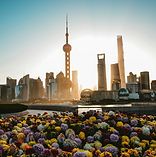
Shanghai
China’s most international city, where treaty-port history, migration, lilong neighbourhoods, industrial heritage, and an ever-changing skyline meet. Shanghai matters as the clearest expression of how modern Chinese urban culture has been formed through exchange, reinvention, and layered local memory.
Programme Highlights

Shanghai Museum
A major collection through which students trace how bronze, jade, ceramics, calligraphy, furniture, and other objects expressed technology, hierarchy, belief, and daily life across different periods of Chinese history.

The Bund & Shanghai Tower
Across the Huangpu River, the Bund and Pudong capture Shanghai’s transformation from treaty-port city to global metropolis. Historic waterfront architecture, ambitious urban planning, and the skyline around Shanghai Tower reveal the speed, scale, and layered identity of modern Shanghai.

Yu Garden preserves the spatial language of a Ming garden through rockeries, water, framed views, and layered courtyards. Together with the surrounding Old City, it connects classical aesthetics with worship, food culture, commerce, and the everyday history of Shanghai.
Yu Garden &
the Old City

Humble Administrator’s Garden & Suzhou Embroidery
The Humble Administrator’s Garden is a defining expression of Jiangnan garden culture, where architecture, water, plants, and borrowed scenery form a composed natural world. Suzhou embroidery carries the same regional ideals into silk, colour, precision, and living craftsmanship.

West Lake
West Lake and its surrounding hills, temples, gardens, causeways, historic sites, and Longjing tea fields form one of China’s most influential cultural landscapes. Poetry, painting, Buddhism, tea culture, public life, and centuries of cultural memory come together here around the enduring ideal of harmony between people and nature.

Forbidden City & Beijing Central Axis
The Forbidden City stands at the ceremonial heart of Beijing’s Central Axis. Its courtyards, gates, halls, and axial planning express the architectural principles, political hierarchy, and symbolic order that shaped China’s imperial capital for centuries.
Itinerary
SHANGHAI
Welcome Dinner & Free time
A welcome dinner followed by icebreaker.
Programme Briefing
Short orientation session outlining the journey, logistics, and experience flow.


MORE TRIPS ON YUHO

Technology & Innovation in China

See how ideas scale into real industrial ecosystems. Robotics, EVs, smart manufacturing, and applied AI — not as theoretical concepts, but as operating systems running at China's speed and density.
[Robotics / Engineering / Manufacturing / AI]
7 DAYS · 6 NIGHT
BEIJING · SHENZHEN
China's Creative Odyssey

Design reflects how a society thinks about space, status, memory, and modernity. Students learn to read China's visual culture — from ancient craft to contemporary art and digital design — as a record of civilisation in motion, not a catalogue of aesthetic styles.
[Art / Design / Architecture / Cultural System]
14 DAYS · 13 NIGHT
BEIJING · HANGZHOU · SUZHOU · SHANGHAI
Guardians of the Plateau

China, the world's largest clean energy investor and its largest coal consumer. This programme puts students inside that contradiction — the world's most consequential live case study in sustainability, industrial policy, and ecological complexity
[ESG / Environment / Energy Transition / Ecology]
11 DAYS · 10 NIGHT
CHENGDU · QINGHAI PROVINCE